Beginning
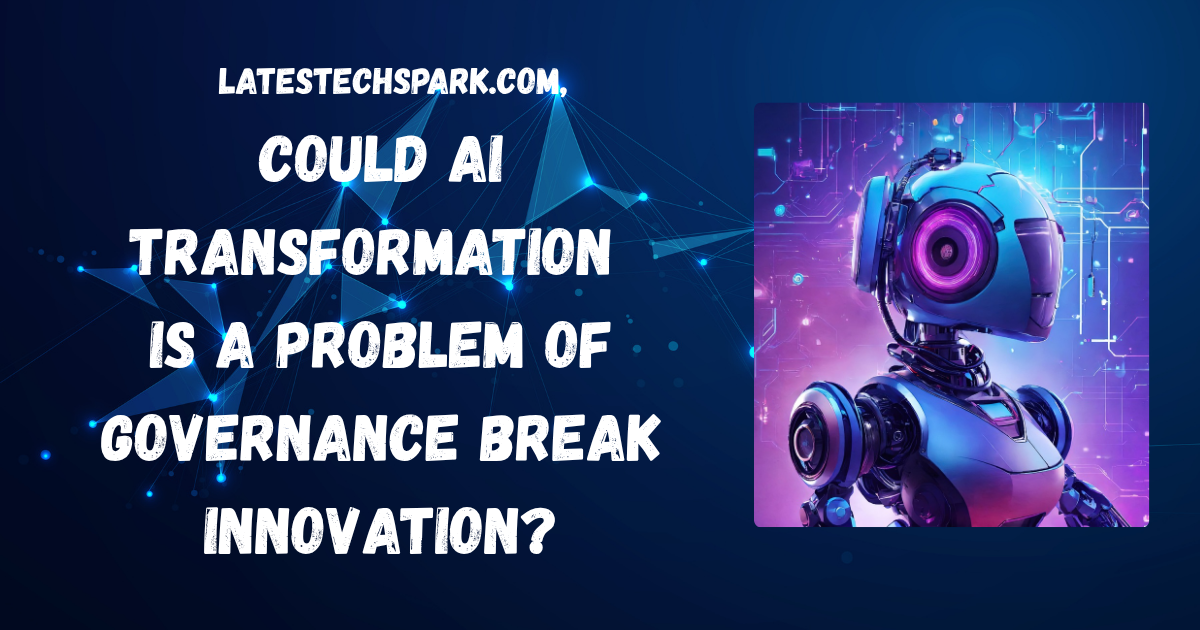
AI Transformation Is a Problem of Governance The fact is that companies around the world are deeply engaged in adopting artificial intelligence (AI) technologies. AI is capable of achieving three major things by automating human tasks and making intelligent decisions. To ensure that AI systems are a good fit, organizations must have a strong governance framework.
Changing the approach from just doing the technical work towards managing AI projects with controls, is what the latest advances in AI technology are demanding from companies. Turning to AI transformation as an issue of governance, it is clear from the data that for organizations to be able to implement these technologies.
Why Is AI Transformation Viewed as a Governance Bottleneck?
How do control frameworks influence innovation speed?
Control frameworks, which set the permissible zone for the operations, have a major impact on how fast new things are created. When organizations have tightly controlled systems for experimentation, they can actually develop safer ways of testing through the establishment of clearly delineated operational procedures.
Why do rigid policies slow down technological experimentation?
Because of the strict regulations they must adhere to, that prevent them from venturing into the unknown, the innovation process of the teams is hindered. Also, when organizations impose very stringent restrictions, the approval time of projects gets extended which consequently results in a lower rate of innovation.
What structural gaps appear when governance lags behind AI growth?
Structural gaps arise because the systems that AI Transformation Is a Problem of Governance do not follow the pace of evolution of AI. The system struggles because two factors exist which include the desire to distribute responsibilities properly and the absence of effective accountability.
How Do Policies Influence the Path of AI Advancement?
How Do Executive Choices Guide the Development of Intelligent Systems?
Leadership decision-making processes have a strong influence on the changes and implementation of AI Transformation Is a Problem of Governance systems. Top management set the organization’s main focus through their decisions related to the budget and by recognizing the cases.
In what way do internal controls reflect the main focus of development?
Internal controls of a company are basically the sets of rules which guide the operations and to what extent certain projects in the area of artificial intelligence can be developed. These policies are used to set the level of the risk that is deemed acceptable and to make provision.
How can supervision schemes act as a double-edged sword?
By adopting supervision schemes, AI Transformation Is a Problem of Governance may in fact turn them into a channel for promoting innovative solutions because of the strict nature of the schemes which result in reduced operational risks. Without a doubt, a tight set of rules is bound to lead to stumbling blocks in the conducting of experiments.
What Obstacles Does Insufficient Governance Raise for AI Innovation?
Does lack of oversight compromise system trustworthiness?
Unaccountability is a weapon that slows identifying errors and resolving issues in artificial intelligence systems. Developers and organizations, in their habit of evading responsibility, indirectly contribute to the degradation of system performance over time.
How might ambiguous rules cause developers hesitation?
It is the developers’ liability to perform certain tasks. In the meantime, unclear regulations confuse them as to which activities are permissible and which should be avoided. The current scenario not only creates obstacles by inhibiting innovation but also causes delay in development of projects.
What problems arise in a governance vacuum?
When AI Transformation Is a Problem of Governance lags behind the evolution of AI, companies are exposed to multiple risks such as biases, misuse of data, and failing to adequately secure data. The existing statutes are not an efficient weapon against modern-day problems as they keep the system vulnerable to attacks.
How Do Moral Concerns Connect With AI Management Problems?
Why do bias and fairness concerns demand stronger oversight?
When AI Transformation Is a Problem of Governance systems are biased, they tend to generate biased outcomes and consequently treat some people unfairly or discriminate against them in a decision-making process. Lack of a proper surveillance mechanism will lead to problems being concealed.
How does transparency impact public trust in AI solutions?
Transparency procedures give users the opportunity to learn the techniques a specific AI system employs to come up with decisions and manage data. The belief that understanding the workings behind a form of existence lends credibility to their existence is not uncommon.
What moral challenges come with self-operating decision systems?
AI Transformation Is a Problem of Governance systems that operate independently through their autonomous function which raises ethical questions about system responsibility and human control of these technologies. In the event of a failure, people have the problem of accountability.
How Can Organizations Balance Governance With Innovation Goals?
What frameworks support both control and creativity?
AI ethics guidelines and governance schemes based on risk management represent the environment in which such systems function. This scheme offers regulatory oversight helping organizations to experiment and formulate their strategies.
How can agile governance models improve adaptability?
AI Transformation Is a Problem of Governance models based on agility allow organizations to synchronize their operational practices with technological advancements. The mechanism obliges organizations to not only frequently check their AI systems but also keep on upgrading the system.
Why is cross-functional collaboration critical in AI strategy?
Cross-functional collaboration involves bringing together experts in the technical fields with those in legal and business domains in order to get better decision-making results. The mechanism is designed to ensure that AI strategies take into account ethical issues.
What Part Does Data Governance Play in AI Innovation?
How important is data quality in determining the effectiveness of models?
Regardless of every reason and application, it is still most essential that AI models have substantial data quality. The use of clean, accurate, and relevant data leads to improved decision-making results with reduced mistakes in decisions being made.
Is responsible data usage the key to trust?
Organizations earn trust from their customers and users through a demonstrated commitment to responsible data usage. When companies handle data ethically and operate in a transparent manner, people tend to trust decisions made by AI Transformation Is a Problem of Governance to a much greater extent.
What systems ensure secure and compliant data handling?
Organizations protect their confidential information through encryption and access control systems and their compliance with regulatory standards. The solutions protect sensitive data through two security measures which include blocking unauthorized access and stopping data from being misused.
AI Transformation Is a Problem of Governance – Pros and Cons
What Benefits Come From Strong Governance Structures?
Having in place a robust AI Transformation Is a Problem of Governance framework in the workplace is one of the ways to set the level of ethics through the use of AI systems. This framework along with a responsibility system and oversight functions establish the main rules of operations.
What Challenges Could Limit Innovation Potential?
The imposition of strict governance regulations can be a hindrance to innovation as it would be necessary to get approvals at multiple levels and also carry out compliance checks. The deployment of new AI tools gets postponed because companies must comply with onerous requirements of regulations.
How Are Emerging Trends Redefining AI Governance in 2026?
Are adaptive governance models replacing rigid frameworks?
Indeed, adaptive governance models are taking the place of old fixed regulatory frameworks in various sectors. These models give organizations the flexibility to adjust their operational standards as AI systems change continuously.
How is public demand shaping ethical AI policies?
The two elements together drive public policymaking because they have a major impact on decision-making. People now expect AI systems to provide three essential features which are fairness and accountability together with data protection.
Why is transparency becoming a competitive advantage?
Making AI Transformation Is a Problem of Governance systems transparent helps to build a bond of trust not only between users but also with stakeholders. Those organizations that show their users how this AI system actually operates win over trust.
What Future Governance Models Could Unlock AI Innovation?
Could decentralized governance enable faster innovation cycles?
Decentralized governance enables faster innovation because it removes centralized decision processes which require time to complete their work. The system allows multiple teams and stakeholders to perform their tasks without facing any limitations.
How might AI-driven monitoring improve compliance systems?
AI Transformation Is a Problem of Governance surveillance systems offer the opportunity for businesses to keep their compliance in check by constantly monitoring their operations and identifying security vulnerabilities immediately. Besides minimizing human errors, the system is capable of enhancing accuracy.
Will global cooperation lead to unified AI standards?
By working together worldwide, it becomes possible to find a way to establish common AI guidelines that can be implemented both by countries and different sectors of the economy. The use of uniform standards will certainly contribute to safer AI at the global level.
FAQs – AI Transformation Is a Problem of Governance
Can AI Transformation Governance Problem Break Innovation?
AI transformation is a problem of governance frameworks when its current rules are both too strict and not sufficiently clear to provide the operational guidelines. Strict control systems not only prevent artists and creative individuals from doing their work.
What makes governance so relevant when it comes to AI transformation?
Governance is what makes it possible to use AI systems in a way that is aligned with the values of mankind, that is very responsible and exhibits the highest level of transparency possible. It is this mesh of rules and regulations that provides the path for risk management of issues.
Do stringent regulations cause delays in developing AI?
Strong regulations become obstacles to the expansion as they predispose to setting up systems of a high level of complexity that, on top of that, require firms to allocate extra funds for meeting compliance requirements.
How can a company innovate, yet stay compliant?
Organizations adopt AI Transformation Is a Problem of Governance frameworks and risk-allowing methodologies to attain the dual objectives of innovation and regulatory compliance. They ought to make compliance a part of the development cycle rather than treat compliance as a barrier.
Conclusion
The research underlines the urgent requirement for laying down basic norms and responsible supervision of AI Transformation Is a Problem of Governance technology. The innovative capabilities of AI create exceptional growth potential for businesses but organizations must establish control mechanisms together with transparency protocols and accountability systems to use AI technology.
The answer lies in organizations discovering the right balance between their desire for innovation and the requirement for regulatory compliance. Organizations that develop a governance framework which matches their current technological progress will gain maximum advantages from AI technology while maintaining their security and regulatory requirements.