
Beginning
Totally Integrated Automation system drives a more cohesive production method by connecting all the manufacturing processes. Through this system, companies can leverage their operations maximally by using their design and engineering manufacturing as well as quality control functions.
Advanced technologies like IoT and AI introduced along with real-time data analytics are helping companies to be productive and make better decisions through integrated automation at the same time. The machine-to-human communication that automation creates results in a productive environment.
What Totally Integrated Automation Means for the Modern Industry?
How is hardware-software integration done in industrial ecosystems?
Totally Integrated Automation operates using centralized platforms to provide real-time communication between its hardware and software elements. The integrated software solutions allow machines and sensors to work with control systems simultaneously.
Which major components play a role in smooth system connectivity?
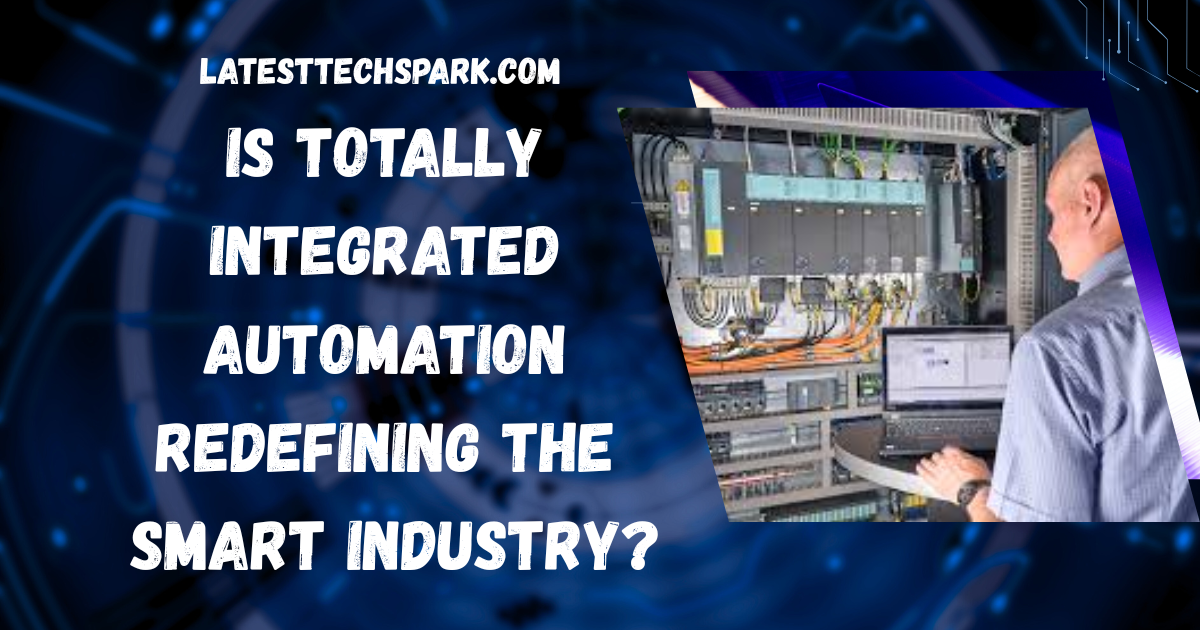
The system’s core elements consist of programmable logic controllers (PLCs) and sensors and network systems and industrial software. The system components function together to enable both real-time data acquisition and processing and data distribution.
What makes integration so crucial for digital transformation?
Integration unites different departments/business units of a company onto a single digital platform resulting in a single digital system. The entire system allows the business to run on real-time data so that quick decisions can be taken on the basis of trustworthy information.
How Does Integrated Automation Streamline Industrial Processes?
How are production workflows optimized through centralized control?
With a central platform managing all their processes at a single point, companies gain the ability to oversee their entire operations. The system provides them with extended visibility while it enables them to monitor their work progress and receive real-time updates and change their operational procedures.
What role does real-time data exchange play in efficiency?
Thanks to the Totally Integrated Automation, production resources share information instantly without any lag. In fact, the system enables detecting problems on the spot, thereby giving a production team an edge in making more informed decisions.
Why does automation reduce manual intervention across operations?
Almost all the repetitive tasks that humans carry out are replaced by machines. The system not only lessens human errors but at the same time significantly enhances operational efficiency thanks to quicker execution delivering precise and reliable outcomes.
Which Technologies Power Totally Integrated Automation Systems?
How do PLCs and control systems coordinate complex operations?
PLCs and control systems in automated systems serve as the ‘brain’ of the operation conducting the work accurately. Immediately on receiving data from sensors, the system makes a decision to control both machine functions and production processes.
What role do IoT devices play in connected manufacturing?
Machines communicate with each other and with other systems by making use of IoT devices which are equipped with a feature to exchange real-time data. The Totally Integrated Automation supplies the necessary data for ongoing diagnostics at the central control center by extracting data.
How is cloud computing enhancing industrial data management?
Using cloud computing, companies keep going with making and storing very large data sets that can be controlled and looked up from any area. This method not only helps companies run their business continuously with access to live data but also supports better system monitoring.
How Is Totally Integrated Automation Transforming Smart Factories?
How do interconnected machines improve productivity levels?
Machines that are connected to a network set up communication channels that allow them to interchange data with one another during the execution of their tasks. This arrangement of Totally Integrated Automation makes it possible for operations to run automatically without any human involvement.
Why does system synchronization reduce operational downtime?
System synchronization involves creating a state where all equipment and processes are in absolute harmony and without any interruptions. Thanks to system harmonizing, faults in the system can be caught and fixed without delay.
What impact does automation have on manufacturing accuracy?
Using Totally Integrated Automation for manufacturing allows companies to achieve their most precise operational standards because it reduces human errors while providing exact process management. Highly advanced machineries and plant manufacturers uniformly embracing agreement characterize a harmoniously cooperative venue.
How Does Combining Data Help Improve Industrial Decision Processes?
How Do Analytics Tools Turn Raw Data into Practical Insights?
Analytics tools sift through very large data sets to identify current patterns and changes throughout the entire uncover process. Economical forces make huge data analysis meaningful in business insights used by companies to increase their operational performance.
What Makes Real-Time Monitoring Crucial for Process Control?
Industries implement real-time monitoring to keep a live view of their processes. This approach not only helps in detecting problems immediately but also ensures that operations do not have to be stopped, in fact, it leads to even better management of the system.
What are the advantages of implementing maintenance strategies?
Predictive maintenance is a technique based on the utilization of various data analysis techniques in forecasting equipment breakdowns. Through Totally Integrated Automation, businesses not only minimize the frequency of unplanned equipment breakdowns but also find ways to cut maintenance costs, all the while.
How Does Automation Contribute to Industry 4.0 Objectives?
In What Ways Does Connectivity Power Smart Manufacturing Systems?
In manufacturing, the need for machines, devices, and systems to communicate with each other is met by the use of connectivity. The exchange of data improves the compatibility of systems and at the same time helps to minimize unproductive times and increase the overall output.
Why is digital transformation dependent on integrated systems?
To digitally transform a business, departments must have unified access to data and process control through integrated systems. If there is no integration, then information will be kept in different places isolated from one another, which will negatively impact the ability to get insights from the data.
What role does automation play in achieving operational agility?
Totally Integrated Automation is a technology that allows a firm to swiftly change its operation in line with a customer changing the demand, production requirements, and the coming of new competitors to the market. Human participation is lessened as this system is implemented and at the same time.
Totally Integrated Automation – Pros and Cons
What Benefits Make Totally Integrated Automation a Game-Changer?
Totally Integrated Automation offers greater operational efficiency by having all elements of a system combined into one working system. This not only fosters production efficiency but also enables proper decision-making from immediate data-driven analysis.
What Limitations Could Impact Implementation Success?
Besides the first cost, the complex installation requirements make fully integrated automation a costly option compared to its benefits. The procedure of updating old systems with modern technologies is a major hurdle for most companies.
How Are New Trends Transforming Automation in 2026?
Are AI-Powered Systems Improving Automation Intelligence?
AI-powered Totally Integrated Automation platforms have been capable of making more intelligent decisions independently than before. Such systems allow a machine to learn from data and at the same time produce relevant and consistent outcomes.
How is 5G enabling faster industrial connectivity?
Industrial environments can be connected with lightning speed thanks to 5G. 5G technology is capable of establishing the fastest communication forms and the closest links between devices. In addition, machines equipped with sensors and systems can share information all over the system without any delay.
Why is edge computing becoming essential for real-time control?
Edge computing deals with the usage of hardware and software at data generating ends rather than sending them to remote data centers for processing. Apart from accelerating response times, the technology also strengthens decision-making capabilities.
What Future Developments Could Totally Integrated Automation?
Will autonomous factories be the norm in manufacturing?
The Totally Integrated Automation factory operates through its complete automated system and intelligent equipment which enables the facility to run independently with little requirement for human support. The situations that follow will result in faster production processes and decreased operational expenses.
How could AI revolutionize comprehensive production processes?
AI uses predictive maintenance to predict equipment failures and it uses real-time data to improve production systems. The system can perform three main tasks, which include optimizing and planning and scheduling, to achieve its goal of minimizing waste while increasing production output.
Will global industries adopt unified automation frameworks?
Many industries across the globe are transitioning to a unified type of automation framework which will assist them in better synchronization of their operations and integration of their processes, the existence of such systems would mean that various machines.
How Can Businesses Implement Integrated Automation Solutions?
What are essential ingredients for successful system integration?
Totally Integrated Automation is a complex process and it requires three main components: software that is compatible with standard protocols, and infrastructure that is scalable. Besides, with the combination of constant monitoring and regular system testing, technical problems are bound to decrease.
How does training the workforce facilitate digital transformation?
Training the workforce serves to facilitate employees in gaining knowledge of, and effectively using new digital tools and automated systems. Besides changing the resistance to system changes, it also increases operational efficiency during the daily work of the employees.
What makes phased implementation indispensable for sustained success?
Phased implementation helps organizations to divide the automation process into several stages rather than executing it all at once. Given the lower impact on disruptive factors, less disruption is anticipated with this method, and translated into the teams’ ability to adopt change gradually.
Frequently Asked Questions (FAQs)
What Does Fully Integrated Automation Mean?
Totally Integrated Automation means linking all parts of an industrial operation into one cohesive system. The system requires machines and software and production units to work together in a seamless way. Yahoo mail as a system operates via its integrated automation system.
Which industries benefit the most from this approach?
The manufacturing and automotive industries together with the energy and pharmaceutical sectors, receive particular advantages from this approach. The industries use their systems to achieve maximum operational efficiency.
How expensive is implementing integrated automation systems?
The first expense of an integrated automation system may be quite significant. The industrial cost could be determined by the size of the industry and also the technological system being used. This system offers two main advantages, among which are a decrease in operating costs.
What technologies are required for full integration?
The Totally Integrated Automation requires IoT technology, AI systems, cloud computing, and industrial control systems, among others. These technologies allow a machine-to-software communication channel via real-time communication.
Conclusion
The evidence demonstrates that Totally Integrated Automation serves as an effective solution for transforming present-day industrial systems because it creates a unified system through its connections between production components and operational software and machinery.
Automation systems integrating all operations of manufacturing will be leading the way to intelligent change of manufacturing environments these days because industries seldom stick to advanced technologies such as AI, IoT and cloud computing systems.