
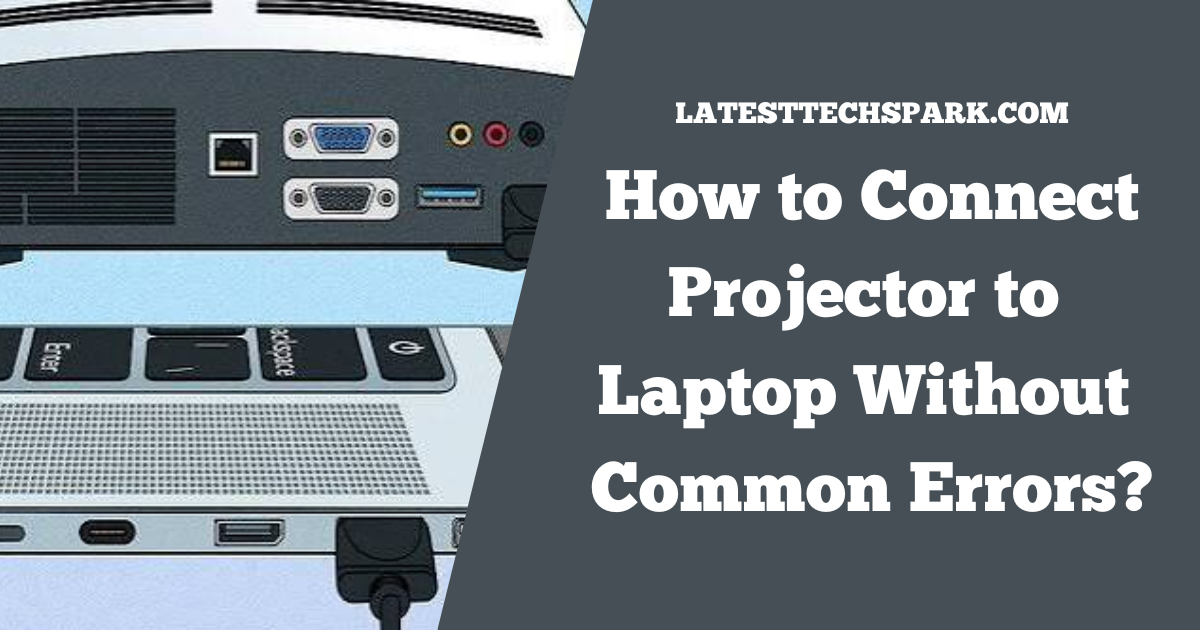
Beginning
How to connect projector to laptop is a question that’s asked a lot, by students and also by professionals, who want to show their work out in front of a large screen. Indeed, you know that whether your activity involves making business presentations, attending virtual classrooms, or creating your own home cinema.
About the most new laptops and projectors being equipped with various ports that one can use for connecting, that definitely means one of those methods will make your entire setup much simpler. Once you’re familiar with which ports you need, what type of cable you can use, and how you change the display settings you’ll probably always have a steady connection.
Why Is Proper Projector Connection Important?
What Should You Check Before Connecting a Projector?
How to connect projector to laptop, the owner should basically make sure both machines have the same kind of ports, like HDMI, VGA, and USB-C, because otherwise it gets weird. Also check that you actually have the matching cable or proper adapter that links the projector to the laptop.
Why Do Laptop and Projector Compatibility Matter?
Compatibility of your laptop and projector matters a lot since some devices are made to support higher or lower resolution screens than others which support different signal standards. When you have compatible devices, you get a perfect video image.
Which Connection Method Fits Your Device Best?
That depends on the ports available on your laptop and projector. For instance, HDMI offers excellent video and audio and is therefore widely used for this purpose. Besides USB-C or wireless solutions are also frequently employed these days.
What Should You Prepare Before Connecting a Projector?
Which Cable Works Best for Connecting a Projector?
Projector cables commonly include those in different types such as an HDMI, a VGA, or DisplayPort as well as a USB-C cable. The choice is partly determined depending upon the devices already owned, HDMI cable is the most preferred.
Can the Use of Adapters Help with the Mismatch of Ports?
Port mismatch between a laptop and a projector can also be solved by using suitable adapters and it would prevent the need for replacement of the older hardware. Examples of such use could be an HDMA converter to VGA one or even going to a USB-C-HDMM adapter.
To What Extent is it Advisable to Go over the Hardware Requirement?
How to connect projector to laptop, first take a moment and confirm what are the required hardware requirements so that you avoid any compatibility issues between the projector and the laptop. This could include matching port types, checking the type of cable required.
How to Connect Projector to Laptop Using HDMI?
What Are the Steps for a Stable HDMI Connection?
A stable HDMI connection starts with something simple, like using a high quality HDMI cable and making sure it is plugged in firmly on both sides, yes, the projector side and the laptop side. Also try to turn the projector on first, before you connect the laptop.
How Can Users Manage the Settings with Display Correctly?
After you establish a link between the projector and the laptop, you should be able to access the laptop display settings so that you can select how the projector will present the visual material, e.g. the option can be that the display will be the exact duplicate, or only on the projector, etc.
What are the HDMI Issues?
HDMI issues you might face are like a blank screen, “no signal”, flickering, a generally faint picture that is probably caused by loose cables or mismatched settings. First, make sure you have correctly selected the projectors input source, like the port with the HDMI connector attached.
How to Connect Projector to Laptop Wirelessly?
Which Wireless Technologies Support Screen Sharing?
To do that, you can use Miracast (also called WiFi Display), Apple AirPlay, Google Chromecast, Intel Wireless Display, and also a direct link thing via Wi-Fi Direct. They make it possible to mirror, or kind of extend, the computer screen over a wireless internet connection, with no cords.
How Can You Pair Devices Successfully?
Start projector wireless display feature and screen sharing feature on your computer to get them successfully paired. Both equipment must be very near in location and also on the same Wi-Fi network if required.
How Can You Pair Devices Successfully?
How to connect projector to laptop, First, ensure that both devices support the same wireless technology and are running the latest updates. Then, reboot the laptop and reboot the projector. After reconnecting to their network try again.
Why Does Projector Connection Sometimes Fail?
What Causes a No Signal Error?
In most cases, “No Signal” error is shown when the projector can’t sense any incoming video source through the laptop. Usually, it happens simply because of a wrong input channel selection, for instance, you select HDMI but the cable is plugged into a VGA port.
How to Solve Issues related to Display Detection?
Sometimes, after just turning the display off you can solve issues with connecting the external video devices. This fast refresh often forces a new connection (handshake) between the devices to be made. Also you can try changing the plug or unplug the connector from the cable.
Which Software Settings Affect the Projector?
There are also projector-related settings that can affect how the projector performs. Besides the hardware settings, there are a bunch of display configuration settings too, and they can mess with how the projector behaves.
Which Common Mistakes Should You Avoid?
Why Can Loose Connections Interrupt the Display?
If the link cable between the projector and laptop feels kind of loose, or just only partially connected, it can block things and generally mess with the signal transfer. In a lot of situations you can do this quick check, like right away, on the HDMI, VGA, or USB-C leads to confirm they’re properly seated.
How Can Outdated Drivers Generate Compatibility Problems?
Your laptop probably cannot communicate or cooperate effectively with the projector, if your graphics and the display drivers are old or you haven’t installed the latest updates. In fact, most of the time, updating your OS and graphics drivers significantly improves the compatibility.
What Routine Testing Avoids Connection Breakdown?
How to connect projector to laptop: You need to power your two devices on and make sure that the projector input source is correct first. After that, you should do a quick recheck, make sure all of your cables are properly inserted, and maybe review your laptop screen display settings.
What Are the Pros and Cons of Different Connection Methods?
Which Benefits Make Modern Projector Connections More Convenient?
One of the main features of How to connect projector to laptop, modern connections is that they are very intuitive and user-friendly. For instance, it takes just a simple cable connection and you are done, or you can wirelessly mirror the picture, and lastly, get excellent quality images from the display.
What Drawbacks Should Users Consider?
Depending on the way users connect devices, some connection methods may require the use of additional cable adapters, or ports that have to be physically present for the connection. So, the setup will be not only more expensive but also more complex in terms of operations.
How Could Projector Connectivity Improve in the Future?
Will Wireless Projection Become the New Standard?
One of the reasons why wireless projection has become the most talked about among users is it completely gets rid of cables and gives you the flexibility that a person always desires. With improvement in connectivity through Wi‑Fi and Bluetooth, projectors and laptops.
In What Way AI Could Make Your Projector and Laptop Compatible?
Thanks to AI, you might connect your projector and laptop in a flash way, much like magic! It will first, of course, detect all compatible devices, second, it will choose the best display setup for you, and third, you need not touch it as it will all happen on its own.
What Kinds of Improvements May Reduce Manual Setup?
The future is likely to bring updates such as automatic screen detection, intelligent syncing, and plug-and-play solutions where all the setup is either extremely short, or even negligible, at least to us humans, there may also be cloud-based device management, along with smarter firmware.
Frequently Asked Questions
Why Is My Laptop Not Detecting the Projector?
Probably, if your laptop can’t really detect the projector, it may be a faulty connection, or maybe the input is off i.e the wrong source is selected. It also could be tied to drivers that are out of date for the graphics card, or you may have chosen the wrong display settings by accident.
Can I Connect a Projector Without an HDMI Port?
Of course, you can connect to a projector without an HDMI port, by means of using other ports such as VGA, USB-C, Display Port. Also, adapters that can convert the signal from one cable set into another are pretty convenient too.
How can I connect my Laptop Monitor to the Projector?
Using the Windows + P combination is, honestly, probably the easiest way to swap displays on the Windows operating system. In the resulting window, choose one of the following: How to connect projector to laptop: Show only the projector, Duplicated, or Extend.
Which Type of Connection Provides the Superior Output Quality?
You are best off going with HDMI if what matters to you is high quality. A single HDMI cable is able to deliver both high fidelity video and audio so it is quite the winner. Other methods, such as USB-C and Display Port, also have their share of the best performance.
Conclusion
Having skills of How to connect projector to laptop is definitely a must-have, not only to give slideshows but also to enjoy media streaming or work in collaboration with others in various settings. If you pick the suitable connection type and you make the display settings correctly, you are very likely to get stable projection and good picture quality easily.
Whether you use HDMI, USB-C, VGA or you want to have the projection wirelessly, doing the procedures correctly makes it less likely that there would be any issues. Figuring out the different ports which your laptop uses and what your projector can accept are just ways to avoid having problems with connections which are quite common.